
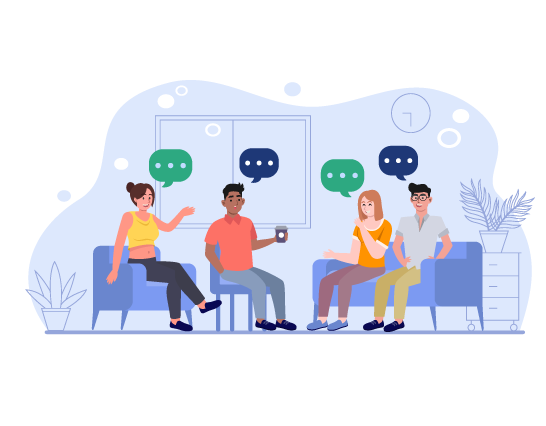
a. Verbal Communication- To develop clarity, confidence, and effectiveness in spoken interactions.
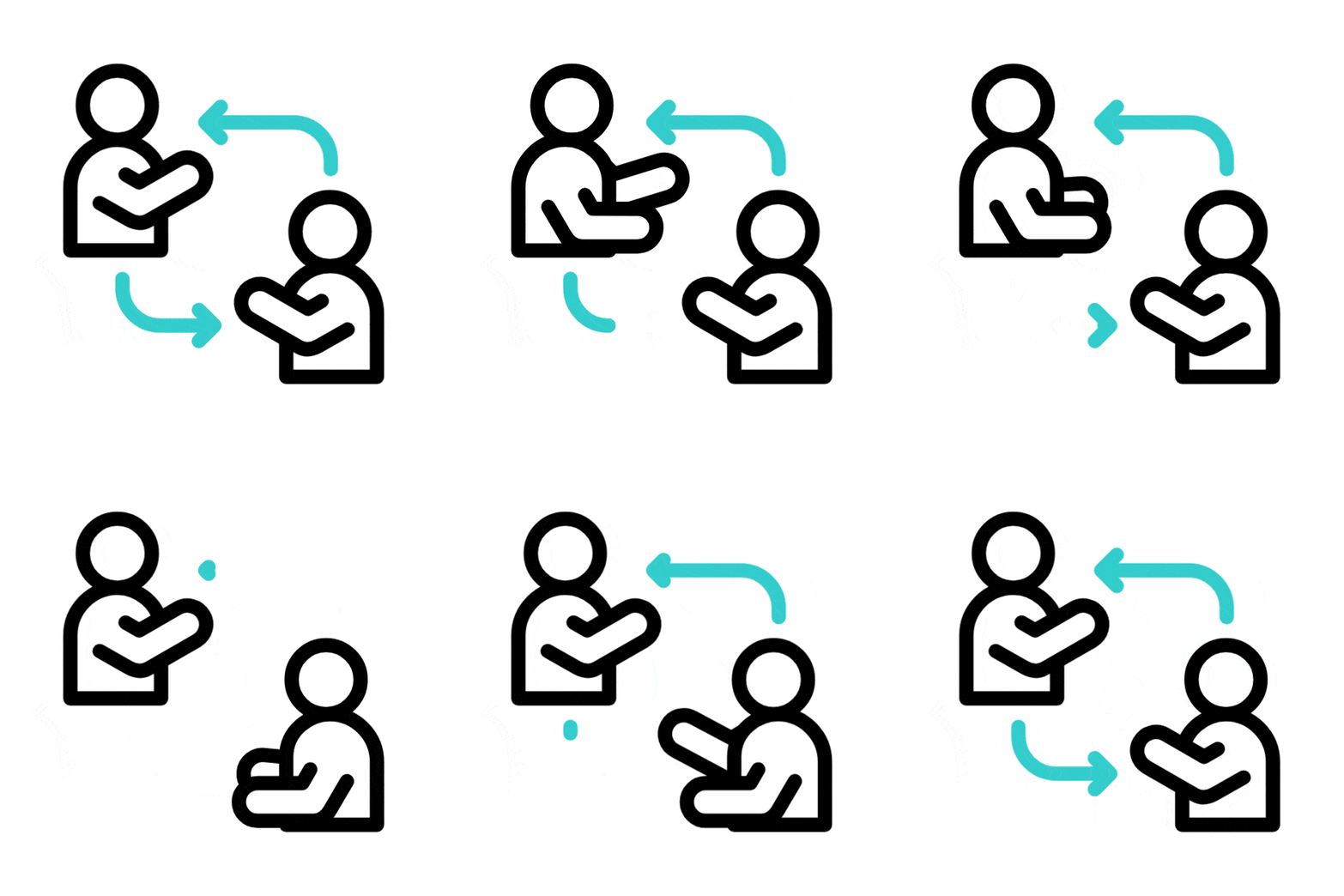 Understanding tone, pitch, pronunciation and vocabulary building.
Structuring speeches and presentations.
Overcoming stage fright.
Practicing one-on-one conversations to enhance persuasion and negotiation skills.
Presenting ideas cohesively.
Developing active participation and critical thinking.
One-on-one conversations - Active listening and empathy. Building rapport in professional and social settings.
Structuring speeches- Openings, body, and conclusions. Handling Q&A sessions and impromptu speaking. Persuasive techniques and logical argumentation. Engaging in panel discussions and group dialogues.
Structuring essays and research papers- Referencing styles and plagiarism. Gathering credible information and synthesising data.
Understanding tone, pitch, pronunciation and vocabulary building.
Structuring speeches and presentations.
Overcoming stage fright.
Practicing one-on-one conversations to enhance persuasion and negotiation skills.
Presenting ideas cohesively.
Developing active participation and critical thinking.
One-on-one conversations - Active listening and empathy. Building rapport in professional and social settings.
Structuring speeches- Openings, body, and conclusions. Handling Q&A sessions and impromptu speaking. Persuasive techniques and logical argumentation. Engaging in panel discussions and group dialogues.
Structuring essays and research papers- Referencing styles and plagiarism. Gathering credible information and synthesising data.

 Understanding body language and gestures.
Aligning verbal and non-verbal cues.
To cultivate precision and creativity in written formats.
Developing a writing style.
Writing stories, essays, and poems.
Exploring descriptive and narrative techniques.
Paraphrasing and summarising.
Drafting formal emails, reports, resumes, proposals and business plans.
Structuring essays and research papers.
Citing sources and avoiding plagiarism.
Revising drafts for clarity and coherence.
Common errors and how to fix them.
Understanding body language and gestures.
Aligning verbal and non-verbal cues.
To cultivate precision and creativity in written formats.
Developing a writing style.
Writing stories, essays, and poems.
Exploring descriptive and narrative techniques.
Paraphrasing and summarising.
Drafting formal emails, reports, resumes, proposals and business plans.
Structuring essays and research papers.
Citing sources and avoiding plagiarism.
Revising drafts for clarity and coherence.
Common errors and how to fix them.
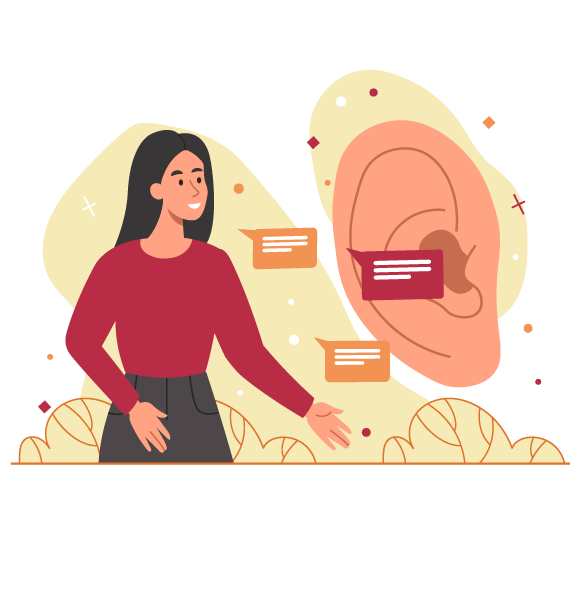
To develop active listening for better understanding and response.
Listening in team settings, brainstorming and decision-making.
Conflict resolution through empathetic listening
Differentiating hearing from listening.
Focus, attention and response.
Asking relevant questions. Giving and receiving constructive feedback.
Incorporating feedback into actions.
Interactive activities like shadowing (learning by observing) for an immersive experience into the inner workings of another employee’s role.
Real-world scenarios: Customer interactions, mock interviews, answering confidently and effectively, communicating with stakeholders.
 Interactive Workshops
Audio-Visual Aids (videos, podcasts)
Personalised Feedback and Evaluation
Hands-on Projects: Create resumes, essays, and presentations.
Real-World Situations, Mock interviews, debates, and role-plays.
Use of AI tools, Canva, Grammarly, or video editors.
Peer Reviews, Collaborative learning and constructive feedback.
Holistic and Multidisciplinary Learning- Integrating interdisciplinary approaches and encouraging connections between communication, creativity, critical thinking, and problem-solving.
Experiential Learning- Role-playing, and activities such as debates, storytelling, case studies, and group discussions.
Personalised and Inclusive Education
Digital and Technological Integration
Competency-Based Learning- Focusing on mastering specific skills rather than rote learning.
Multilingual Approach.
Emotional and Social Intelligence- Activities for fostering empathy, environmental concerns, self-awareness, and interpersonal skills.
Interactive Workshops
Audio-Visual Aids (videos, podcasts)
Personalised Feedback and Evaluation
Hands-on Projects: Create resumes, essays, and presentations.
Real-World Situations, Mock interviews, debates, and role-plays.
Use of AI tools, Canva, Grammarly, or video editors.
Peer Reviews, Collaborative learning and constructive feedback.
Holistic and Multidisciplinary Learning- Integrating interdisciplinary approaches and encouraging connections between communication, creativity, critical thinking, and problem-solving.
Experiential Learning- Role-playing, and activities such as debates, storytelling, case studies, and group discussions.
Personalised and Inclusive Education
Digital and Technological Integration
Competency-Based Learning- Focusing on mastering specific skills rather than rote learning.
Multilingual Approach.
Emotional and Social Intelligence- Activities for fostering empathy, environmental concerns, self-awareness, and interpersonal skills.